Fort Walton Beach Flags: What They Mean & Where to Check Today's
Fort Walton Beach and Okaloosa Island fly the same warning flag colors as the rest of the Emerald Coast — but the daily call is made for THIS stretch of sand, and it doesn't always match what Destin is flying eight miles east. Here's the system, who runs it, and how to check before you cross the bridge.
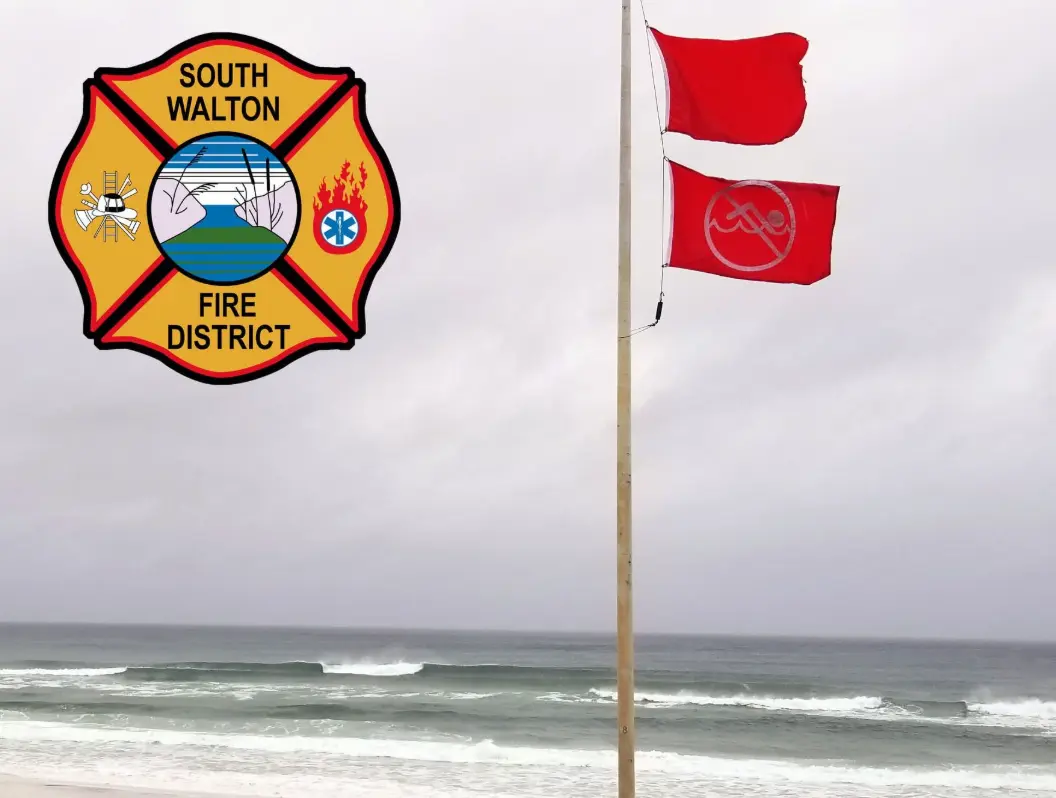
The Fort Walton Beach Flag Colors
Same Gulf Coast system, five signals:
| Flag | Meaning |
|---|---|
| Green | Low hazard — calm conditions. Typically flies only when lifeguards are on duty. |
| Yellow | Medium hazard — moderate surf/currents. The everyday flag; swim near shore with awareness. |
| Red | High hazard — rough surf, strong currents. Stay out of the water. |
| Double Red | Water closed to the public — entering can carry a fine of up to $500 under Okaloosa County rules. |
| Purple | Dangerous marine life spotted — flies alongside a surf flag. |
Who Sets the Flags in Fort Walton Beach
Fort Walton Beach and Okaloosa Island sit under Okaloosa County's beach safety operation — the same county as Destin, but a separately patrolled stretch of coastline. Officials assess surf, wind, and the National Weather Service rip current forecast each morning and fly the day's flag at beach accesses and lifeguard zones along Okaloosa Island, including the stretch around the pier and the Boardwalk.
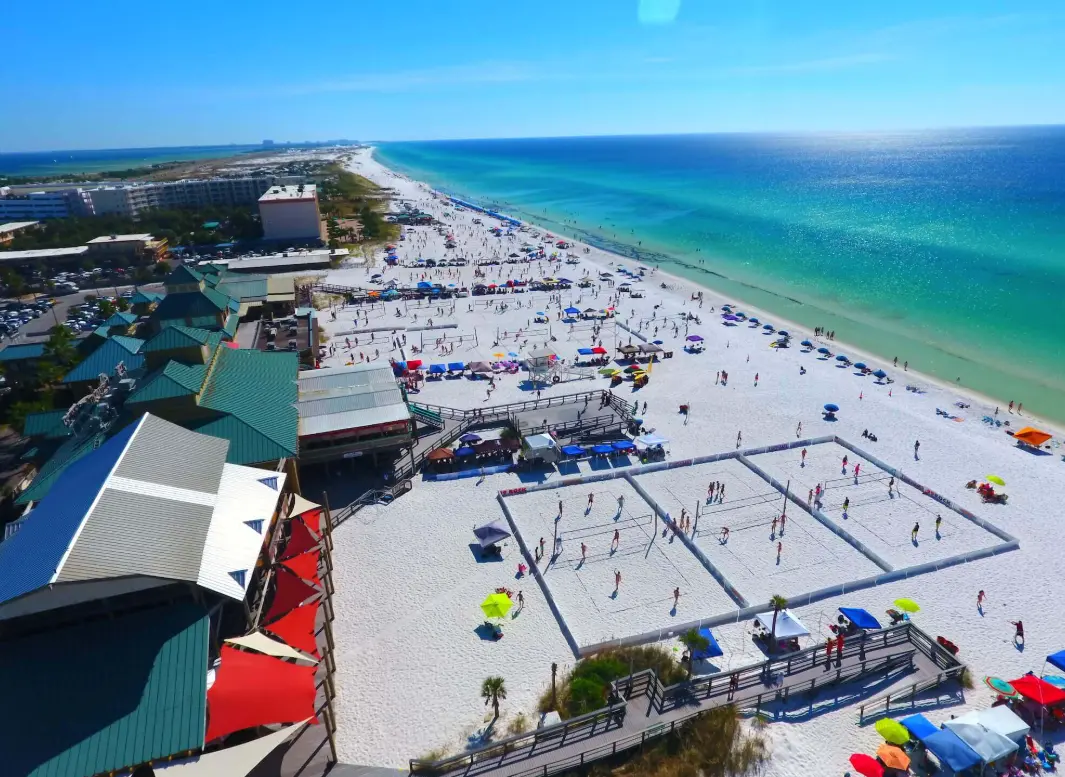
Double Red in Fort Walton: Same Law, Same Fine
The double red rule doesn't soften across the bridge. When two red flags fly over Okaloosa Island, the Gulf is closed to the public, and entering the water can cost up to $500 — enforced by the same county beach safety officers and deputies as in Destin. The sand stays open; the water doesn't.
Making a Fort Walton Beach Day of It
One thing FWB holds over everybody on a rough-water day: the island's best stops don't need the Gulf to cooperate. The Gulfarium sits right on Okaloosa Island — sea lions and dolphins perform rain or shine — the pier is a walk-on attraction in any weather, and the Boardwalk keeps the food and drinks close. A red flag on Okaloosa Island demotes the swim, not the day.
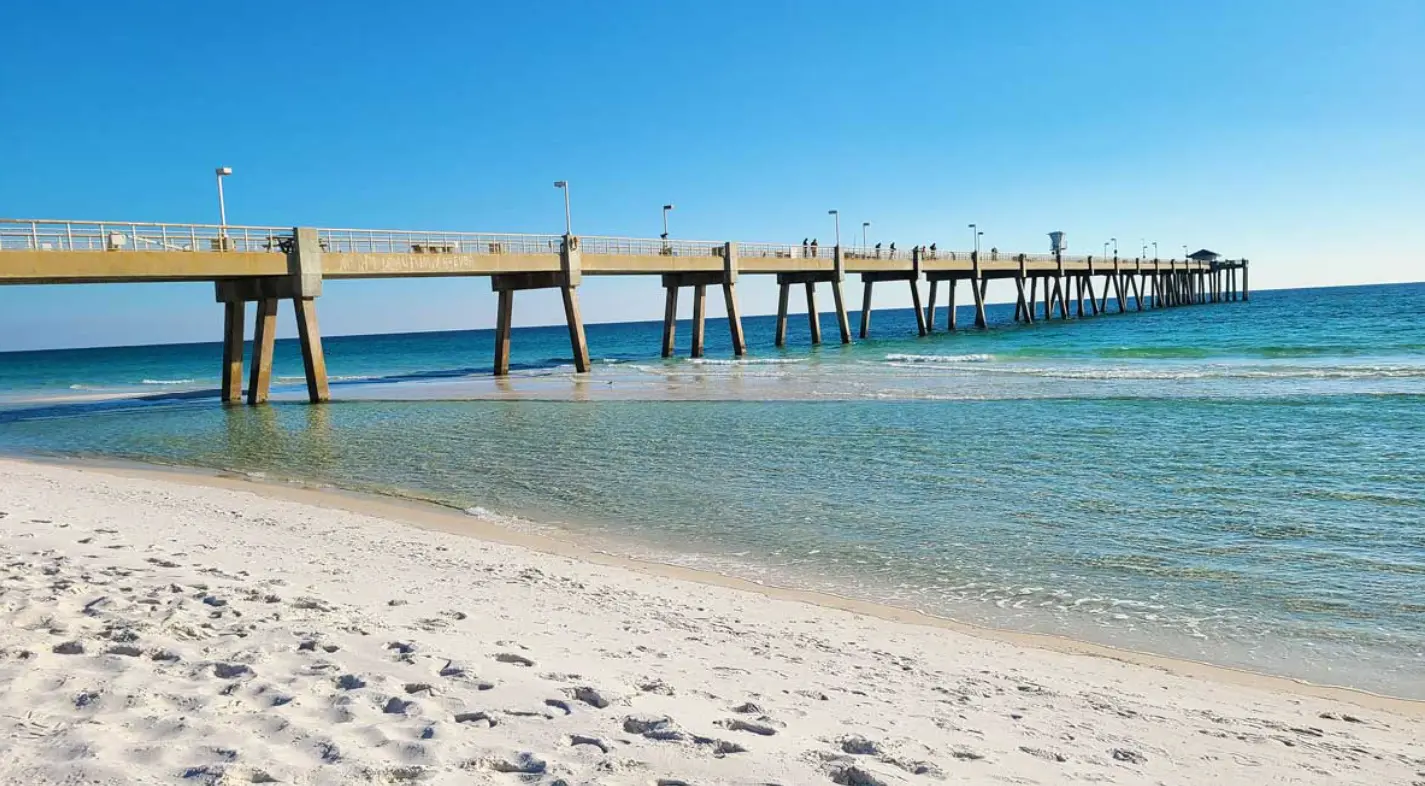
Where to Check Today's Flag
Conditions across the Okaloosa coastline track closely — the live flag and surf report is the fastest read on what kind of day the Gulf is having before you commit to the drive:
Then confirm at your access point when you arrive — the flag on the pole is always the final word. And for the full breakdown of every color, who sets them, and what each one asks of you, see our complete guide to beach flags.
Fort Walton Beach Flag FAQ
What do the flags mean at Fort Walton Beach?
Green is low hazard, yellow is moderate surf or currents, red is high hazard, double red means the water is closed to the public, and purple means dangerous marine life has been spotted. It's the standard Gulf Coast system.
Are Fort Walton Beach flags the same as Destin's?
Same color system and same county, but separate daily calls for separate beaches. The flags usually match, but conditions can differ across the pass — always go by the flag at your own beach access.
Can you swim at Fort Walton Beach on a double red flag day?
No — double red closes the water, and entering the Gulf in Okaloosa County can carry a fine of up to $500. The beach itself stays open.
Where can I check the Fort Walton Beach flag today?
Check the live beach conditions for the current flag and surf report before heading out, then confirm at the flag station at your access point.
Flags are set per-beach and change with conditions — the flag at your access point and lifeguard instructions always take precedence.