Purple Flag in Destin: What's in the Water?
The purple flag is the odd one out on Destin's flagpoles. Every other color grades the surf — purple tells you something is in it. Here's what the purple flag actually means, what's usually behind it, and the question everyone asks: can you still swim?
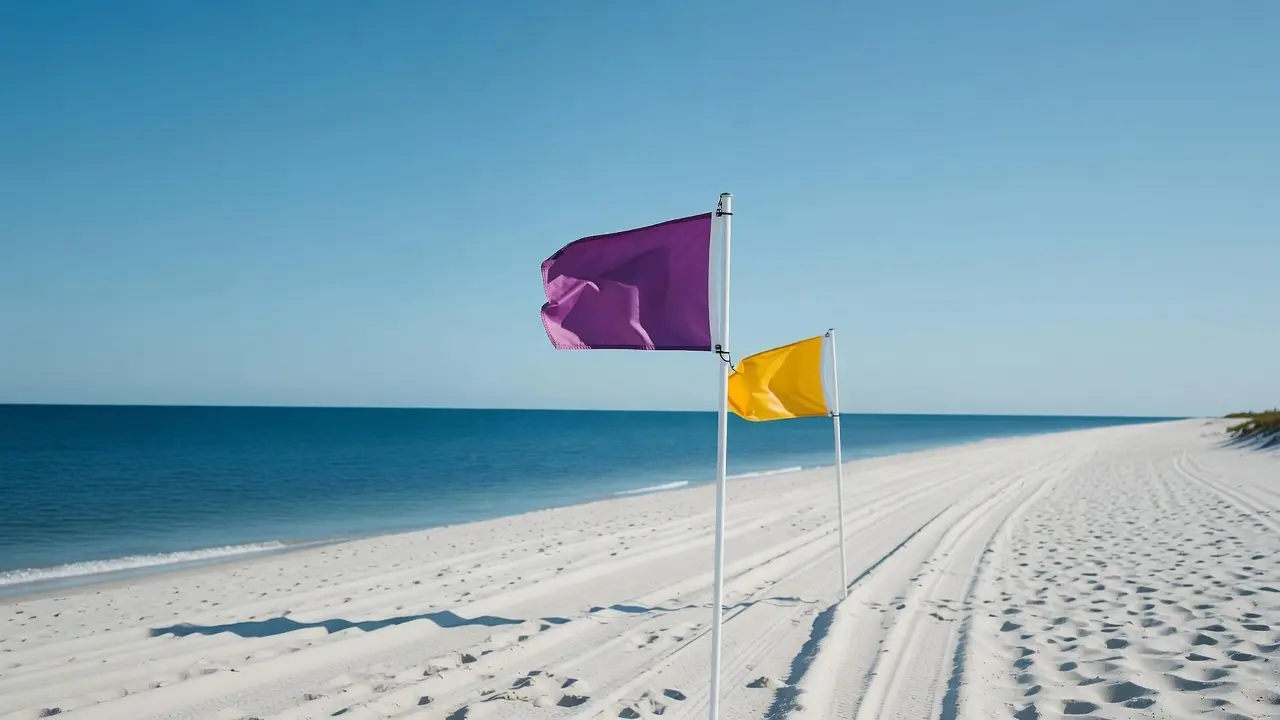
What the Purple Flag Means in Destin
Purple means dangerous marine life has been spotted in the area. In Destin, that's most often jellyfish — but it can also mean stingrays, Portuguese man o' war, or stinging sea lice, depending on the season and what the Gulf blew in overnight.
Here's the part most visitors miss, and it's the key to reading the flagpole correctly:
So Can You Still Swim on a Purple Flag Day?
Legally? Yes — purple is a warning, not a closure (only double red closes the water). Practically, it's a judgment call, and the companion flag does most of the deciding:
- Green + purple: calm, beautiful water with uninvited guests. Plenty of people swim — eyes open, and give anything translucent a wide berth.
- Yellow + purple: moderate surf plus marine life. Confident swimmers only, and this is a strong day for staying waist-deep where you can see what's around you.
- Red + purple: the Gulf is telling you twice. Rough water you shouldn't be in, occupied by things you don't want to meet. Beach day, not swim day.
What's Usually Behind the Purple Flag
Jellyfish — the usual suspects
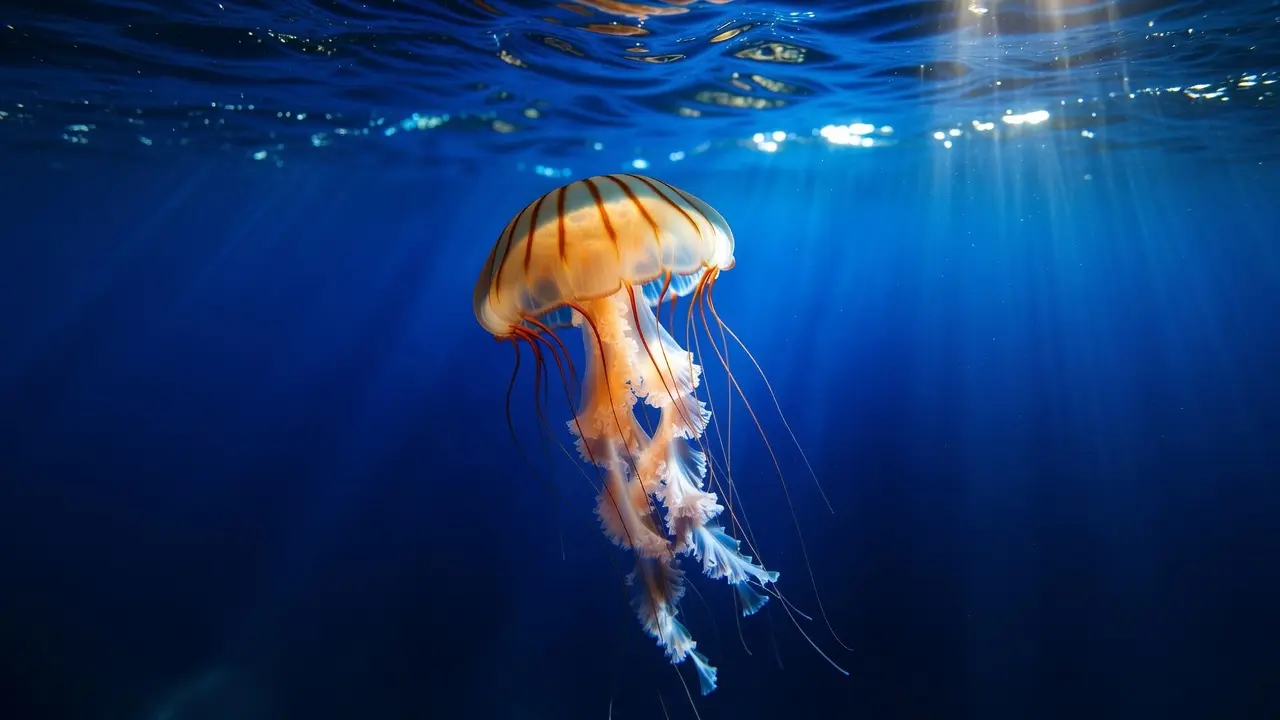
Most Destin purple flags are jellyfish days. Moon jellies are the common ones — translucent, saucer-shaped, and mild; many people barely feel them. Sea nettles pack more of a punch. They tend to arrive in waves through the summer, especially when warm water and onshore winds line up to push them toward the sand.
Portuguese man o' war — look, don't touch
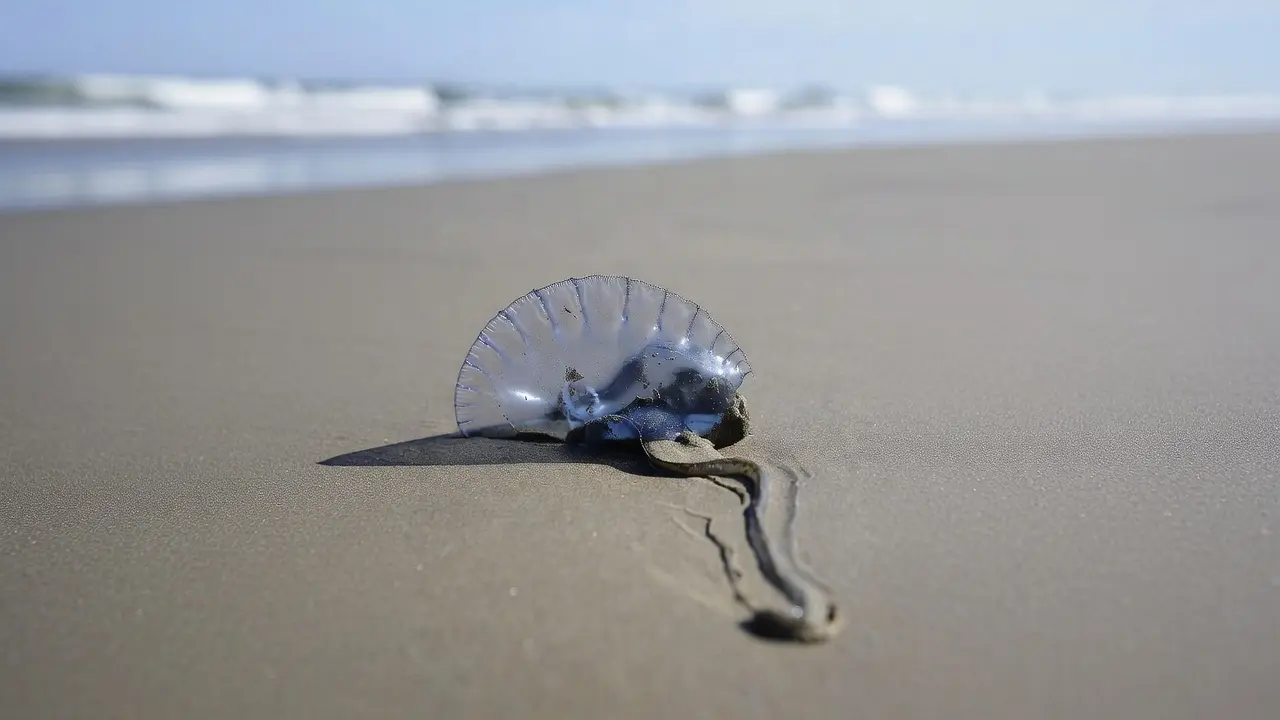
The blue balloon on the sand is the one to take seriously. A Portuguese man o' war isn't technically a jellyfish, but its sting outranks anything else that washes up here — and it stays potent even when the animal is beached and looks deflated. The tentacles can trail many feet from the float, so give it real distance. Kids find the blue bubble irresistible; this is a "point at it from over here" situation.
Sea lice — the invisible ones
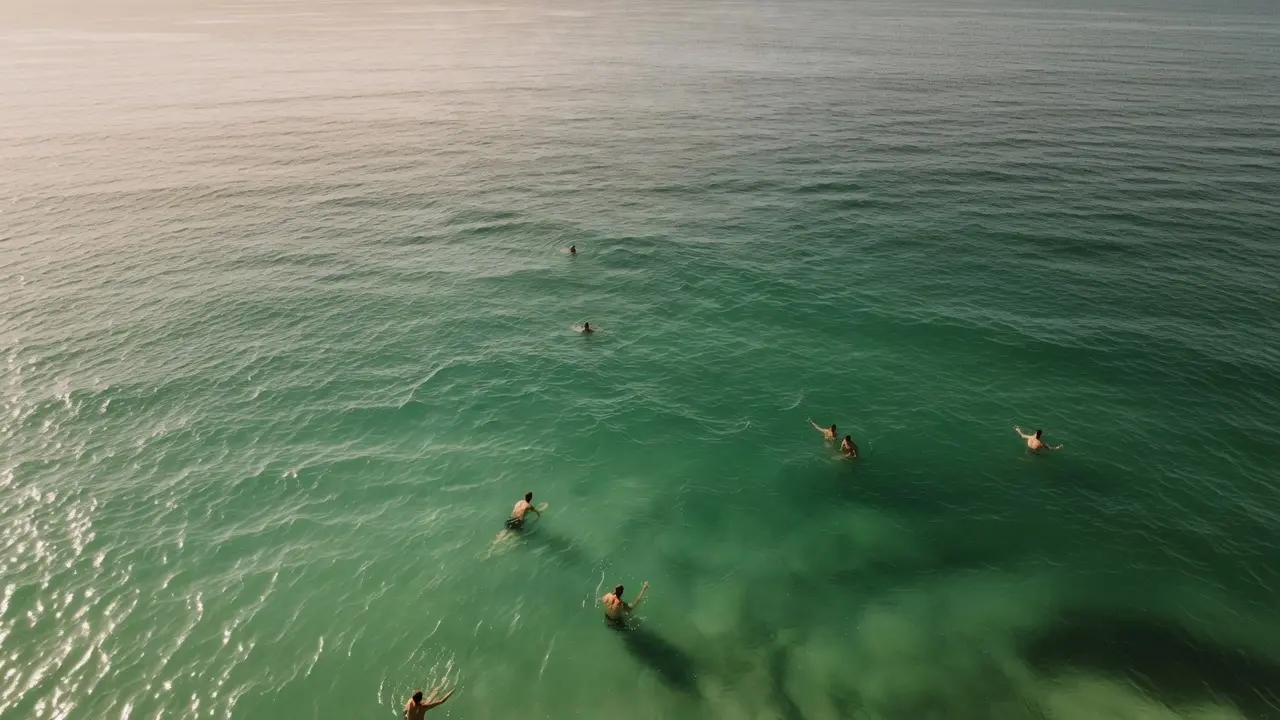
Mid-to-late summer sometimes brings stinging sea lice — nearly invisible larvae that get trapped under swimsuits and leave an itchy rash. Annoying rather than dangerous, but they're a common reason for summer purple flags when no jellyfish are in sight. Rinsing off and changing out of your suit promptly after swimming is the whole defense.
If You Get Stung: The Short Version
- Get out of the water and rinse the area with seawater — not fresh water, which can trigger more stinging cells.
- Remove any visible tentacle bits with tweezers or the edge of a card — not bare fingers.
- Heat helps: a hot shower or hot-water soak (as hot as comfortable) eases most jellyfish stings.
- Skip the folklore. No rubbing with sand, and no — that famous "remedy" from the sitcom doesn't work.
- Get help fast for man o' war stings with severe pain, or any sting causing trouble breathing, chest pain, or spreading reaction — flag down a lifeguard or call 911.
When Purple Flags Fly Most in Destin
Summer is purple flag season — June through August, when the Gulf is warmest and onshore winds herd jellyfish toward the beach. A purple morning often follows a night of steady south wind. The good news: jellyfish arrivals are patchy and move on quickly. A purple flag today says nothing about tomorrow, and conditions get reassessed every morning.
And for the full flagpole decoded — every color, who sets them, and the one flag with a fine attached — see our complete guide to Destin beach flags.
Purple Flag FAQ
What does the purple flag mean at Destin beaches?
Dangerous marine life has been spotted — most often jellyfish, sometimes stingrays, Portuguese man o' war, or stinging sea lice. It flies alongside a surf flag (green, yellow, or red) that tells you the water conditions.
Can you swim when the purple flag is up?
Yes — purple is a warning, not a closure. Whether you should depends on the companion flag and your comfort level. Many people swim on green + purple days with extra awareness; red + purple is a stay-out day for two reasons at once.
Are jellyfish in Destin dangerous?
Most are mild — moon jellies barely sting. Sea nettles hurt more, and Portuguese man o' war (technically not a jellyfish) delivers a serious sting and should never be touched, even washed up on the sand.
What should you do for a jellyfish sting in Destin?
Rinse with seawater, remove tentacle pieces with tweezers, and apply heat — a hot shower or hot-water soak. Seek medical help for man o' war stings or any severe reaction. Avoid fresh water and rubbing the area.
Marine life and flag conditions change daily — follow posted flags and lifeguard guidance, and check conditions before you head down.