Yellow Flag at Destin Beach: Can You Still Swim?
If you spend a week in Destin, you'll spend most of it under a yellow flag — it's the workhorse of the flagpole. So what does yellow actually mean, is it safe to swim, and where's the line for the kids? Short answer: yes, with judgment. Here's the judgment.
What the Yellow Flag Means
Yellow signals medium hazard — moderate surf and/or currents. It's the Gulf saying "I'm not angry, but I'm not asleep either." The water is open, swimming is allowed, and thousands of people enjoy it safely on yellow flag days all summer. What yellow asks of you is respect: currents are present, the surf has some push, and conditions can lean rougher as the day goes on.
The local rule of thumb — the one on the official signage — is worth memorizing: "knee deep is too deep" applies to weaker swimmers on yellow days. For confident swimmers, yellow means stay aware, stay near shore, and respect the sandbar breaks where rip currents form.
Why Yellow Is Destin's Default Flag
Here's the local detail most flag guides miss: yellow isn't just a conditions report — it's also the floor. In this area, a green flag only flies when hazard is minimal and lifeguards are on duty. No lifeguard nearby? The flag defaults to yellow even in gentle conditions, because the risk equation changes when nobody's watching the water professionally.
That's why visitors sometimes see calm, gorgeous water under a yellow flag and assume the system is broken. It isn't — it's telling you two things at once: the surf is manageable, and you're your own lifeguard today.
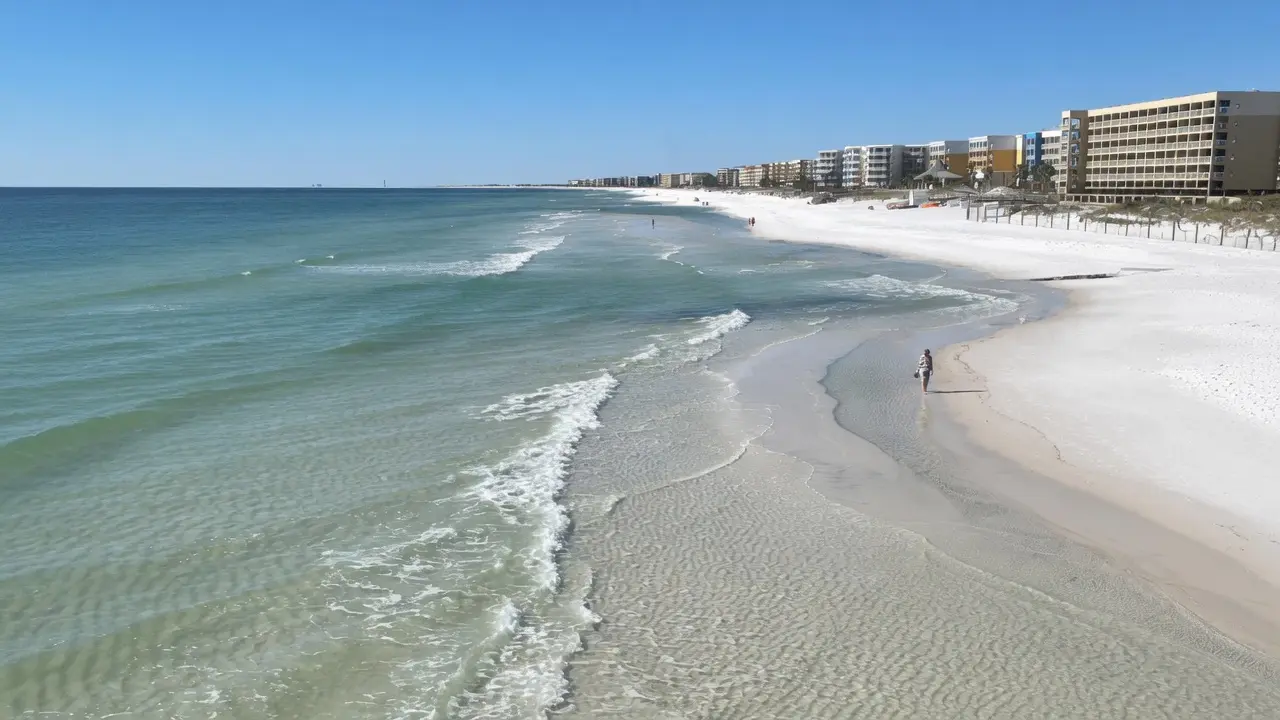
Swimming on a Yellow Flag Day: The Playbook
- Swim where your feet can find the bottom — the first sandbar zone, not beyond it
- Stay in front of your stuff; currents drift you down-beach without you noticing
- Know your exit: pick a landmark on shore before you get in
- Rough patch or gap in the waves that looks "calm"? That's often a rip channel — stay off it
- Wind picking up in the afternoon means the yellow is trending toward red — re-check the flag
Yellow Flag with Kids: Where the Line Is
Yellow days are still great beach days for families — with the line drawn clearly. Keep kids where they can stand flat-footed with their head and shoulders well out of the water, which in practice means waist-deep for them, ankle-to-knee-deep for the littlest ones. The moderate surf that's fun for adults can knock a small kid down and roll them, and the backwash pulls harder than it looks.

When Yellow Turns to Red
Flags are set each morning, but they're not set in stone — a building wind, an approaching storm, or a worsening rip forecast can push yellow to red mid-day. If the surf visibly picks up or lifeguards start moving people in, don't wait for the flag to catch up. And before you head down at all, thirty seconds of checking saves the walk:
Want every color decoded — including the one with a $500 fine attached? Our complete guide to Destin beach flags covers the whole pole.
Yellow Flag FAQ
Is it safe to swim on a yellow flag day in Destin?
Generally yes, for capable swimmers who stay near shore and stay alert. Yellow means moderate surf and currents — open water with conditions that deserve respect, especially around sandbar gaps where rip currents form.
What does the yellow flag mean at the beach?
Medium hazard — moderate surf and/or currents. In the Destin area it's also the default flag when no lifeguard is on duty, even in calmer conditions.
Can kids swim on a yellow flag day?
Yes, in the shallows — where they can stand flat-footed with head and shoulders well above water, with an adult actively watching at the waterline. Moderate surf can knock small children down and the backwash is stronger than it looks.
Why is the flag yellow when the water looks calm?
Often because no lifeguard is on duty — green typically flies only when conditions are minimal-hazard AND lifeguards are present. Calm water under yellow means you're your own lifeguard today.
Conditions change through the day — recheck the flag after weather shifts, and always follow lifeguard instructions over any general guide.