Jellyfish Season in Destin: When It Peaks & What to Do About It
Every summer, somewhere between the sunscreen and the sandcastles, the question comes up: "are the jellyfish here yet?" Here's when jellyfish season actually runs in Destin, which ones you'll meet, and how to keep a few translucent tourists from changing your plans.
When Is Jellyfish Season in Destin?
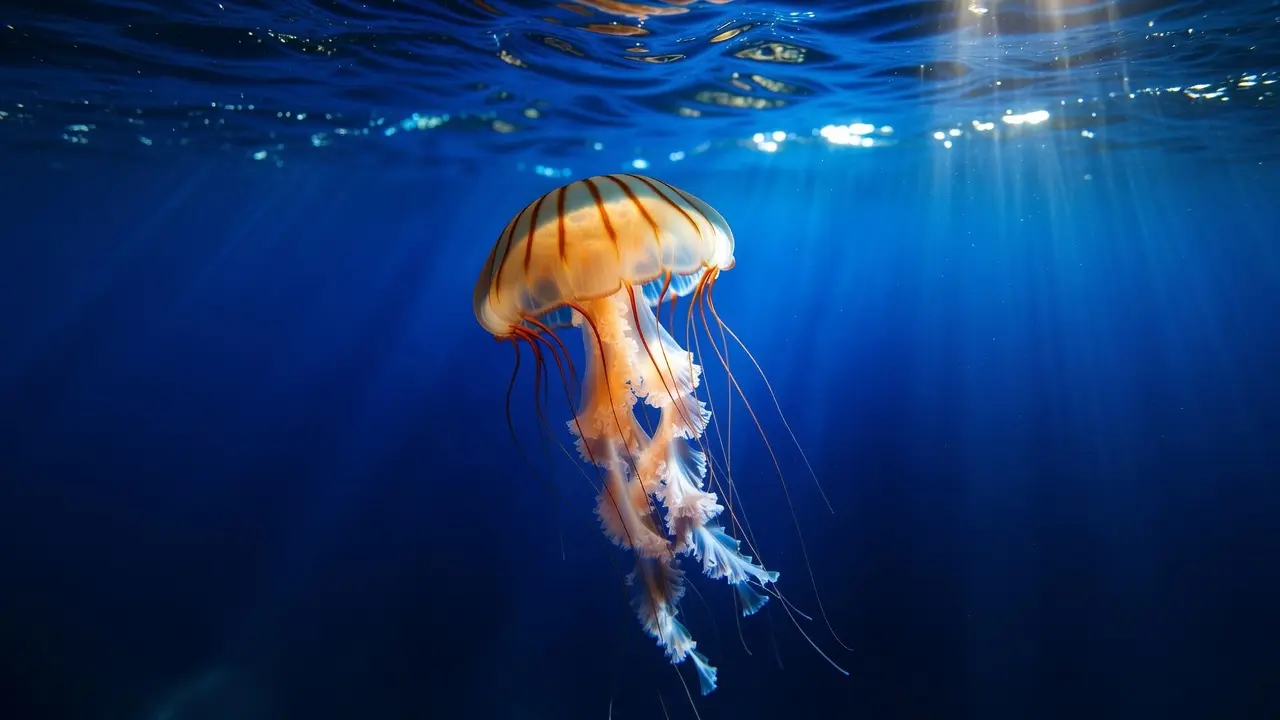
The honest answer: jellyfish can show up any month the Gulf is warm — but the real season runs roughly June through September, peaking in the heat of mid-to-late summer when water temperatures max out. That's when the purple flag makes most of its appearances on Destin flagpoles.
The thing to understand about jellyfish "season" is that it isn't a steady presence — it's patchy. Jellyfish travel where the water sends them, so arrivals come in waves: a few days of steady onshore wind can herd a drift of them toward the sand, and a wind shift can clear the water just as fast. A purple flag Tuesday says nothing about Thursday.
| Months | What to Expect |
|---|---|
| October – April | Occasional stragglers; jellyfish are rarely a factor. Cooler water keeps numbers low. |
| May | Early arrivals possible as the Gulf warms — usually scattered moon jellies. |
| June – August | Peak season. Moon jellies and sea nettles in waves; sea lice possible; man o' war after strong south winds. Purple flags most frequent. |
| September | Still active in warm water, tapering as fall fronts begin stirring the Gulf. |
The Cast of Characters
Moon jellies — the harmless-ish majority
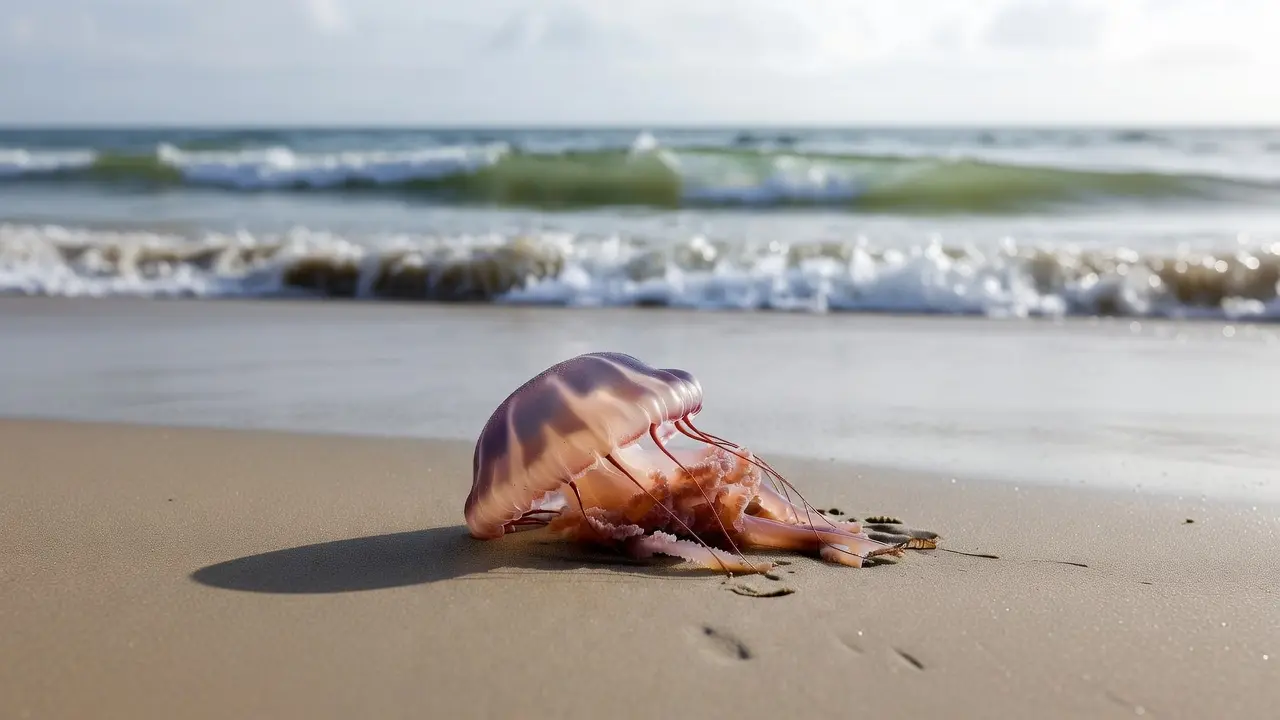
Translucent, saucer-shaped, and the jellyfish you'll see most. Their sting is mild — many people brush one and feel nothing at all. They're also the ones that wash up on the sand looking like abandoned water balloons.
Sea nettles — the ones that actually hurt
Longer tentacles, more attitude. A sea nettle sting won't ruin your vacation, but it'll absolutely ruin your hour. These are the main reason to take the purple flag seriously in peak summer.
Portuguese man o' war — the headline act
Not technically a jellyfish, but it plays one on the beach. The blue float is unmistakable, the sting is serious, and it stays dangerous even beached and deflated. Strong, sustained south winds are what deliver them — after a blowy stretch, scan the wrack line before the kids do.
Sea lice — the invisible extra
Mid-to-late summer sometimes brings stinging sea lice: nearly invisible larvae that slip under swimsuits and leave an itchy rash where fabric traps them. Not dangerous, deeply annoying. Rinse off right after swimming and change out of your suit promptly — that's the entire playbook.
Can You Still Swim During Jellyfish Season?
Almost always, yes. Jellyfish season doesn't close the water — it just asks for awareness. The purple flag means spotted in the area, not wall-to-wall jellies. Practical rules that keep the odds heavily in your favor:
- Read the flagpole first. Purple flies alongside a surf flag — the combination tells the whole story. Our purple flag guide breaks down every pairing.
- Look before you leap — literally. Scan the water at your entry point; jellies drift near the surface and are easiest to spot in Destin's clear water.
- Steer wide of anything translucent, and remember tentacles trail well behind the bell.
- Swim near a lifeguard — they know what's been in the water all morning.
If You Get Stung
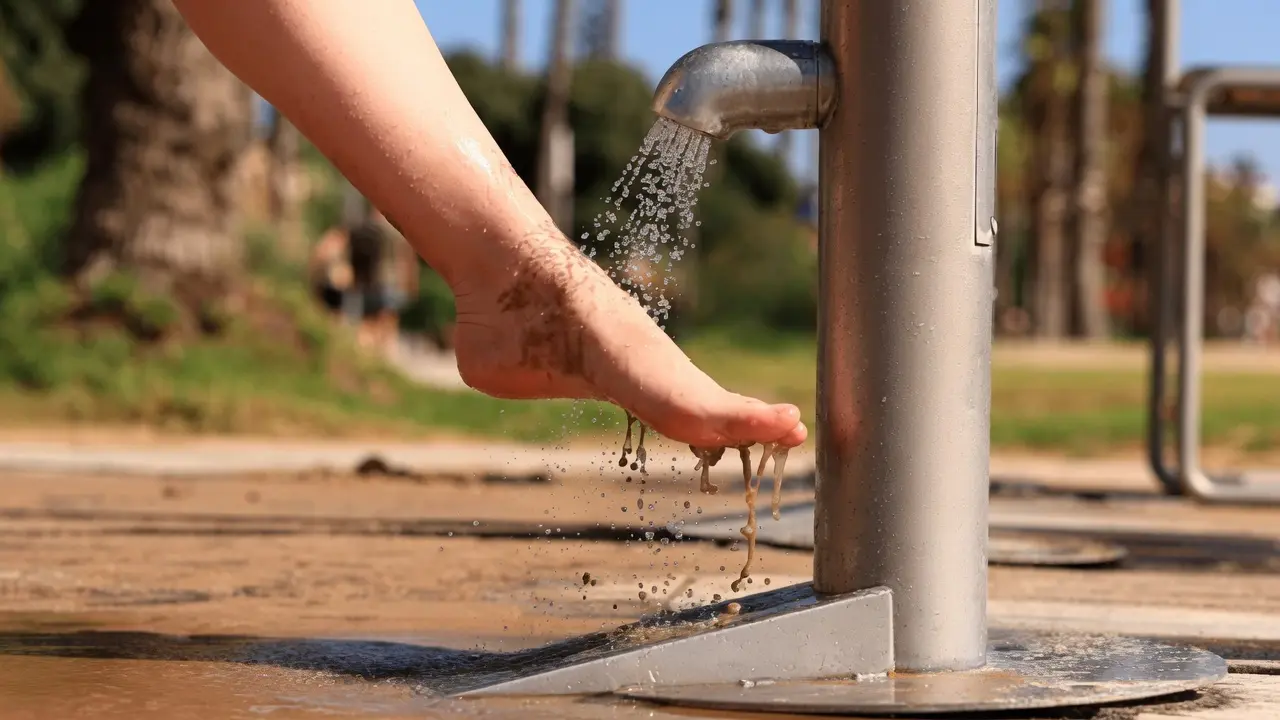
- Out of the water, rinse with seawater. Fresh water can fire more stinging cells — save the beach shower for after the tentacles are off.
- Remove tentacle bits with tweezers or a card edge, never bare fingers.
- Then heat: a hot shower or hot-water soak, as warm as comfortable, takes the fight out of most stings.
- Skip the myths — no sand-scrubbing, and no, the sitcom remedy still doesn't work.
- Escalate for the serious stuff: man o' war stings with severe pain, or any reaction involving breathing trouble, chest pain, or spreading swelling — lifeguard or 911, immediately.
The Bottom Line
Jellyfish season is a footnote to a Destin summer, not a headline. The water's warm, the jellies come and go in patches, and a purple flag day usually still ends up a swim day for most of the beach. Check the flag before you go, keep your eyes open in the water, and know the rinse-and-heat routine — that's 95% of it.
Thirty seconds of checking beats an hour of itching.
See Live Destin Beach Conditions →
New to the flag system? Start with our complete guide to Destin beach flags — every color, decoded.
Jellyfish Season FAQ
What months are jellyfish season in Destin?
Roughly June through September, peaking in mid-to-late summer when Gulf water is warmest. Arrivals come in patches driven by wind and currents, so presence varies day to day.
How do I know if jellyfish are in the water in Destin?
Watch for the purple flag — it flies when dangerous marine life has been spotted. Check the live flag status before heading down, and ask a lifeguard what's been in the water that day.
Can you swim in Destin during jellyfish season?
Yes — jellyfish don't close the water. Read the flag pairing, scan before entering, keep distance from anything translucent, and swim near a lifeguard.
What kind of jellyfish are in Destin?
Mostly mild moon jellies, plus sea nettles with a stronger sting. Portuguese man o' war (technically not a jellyfish) appear after sustained south winds and deliver the most serious sting on this coast.
Marine life is unpredictable and conditions change daily — follow posted flags and lifeguard guidance. Sting first aid here is general information, not medical advice; seek professional care for serious reactions.